

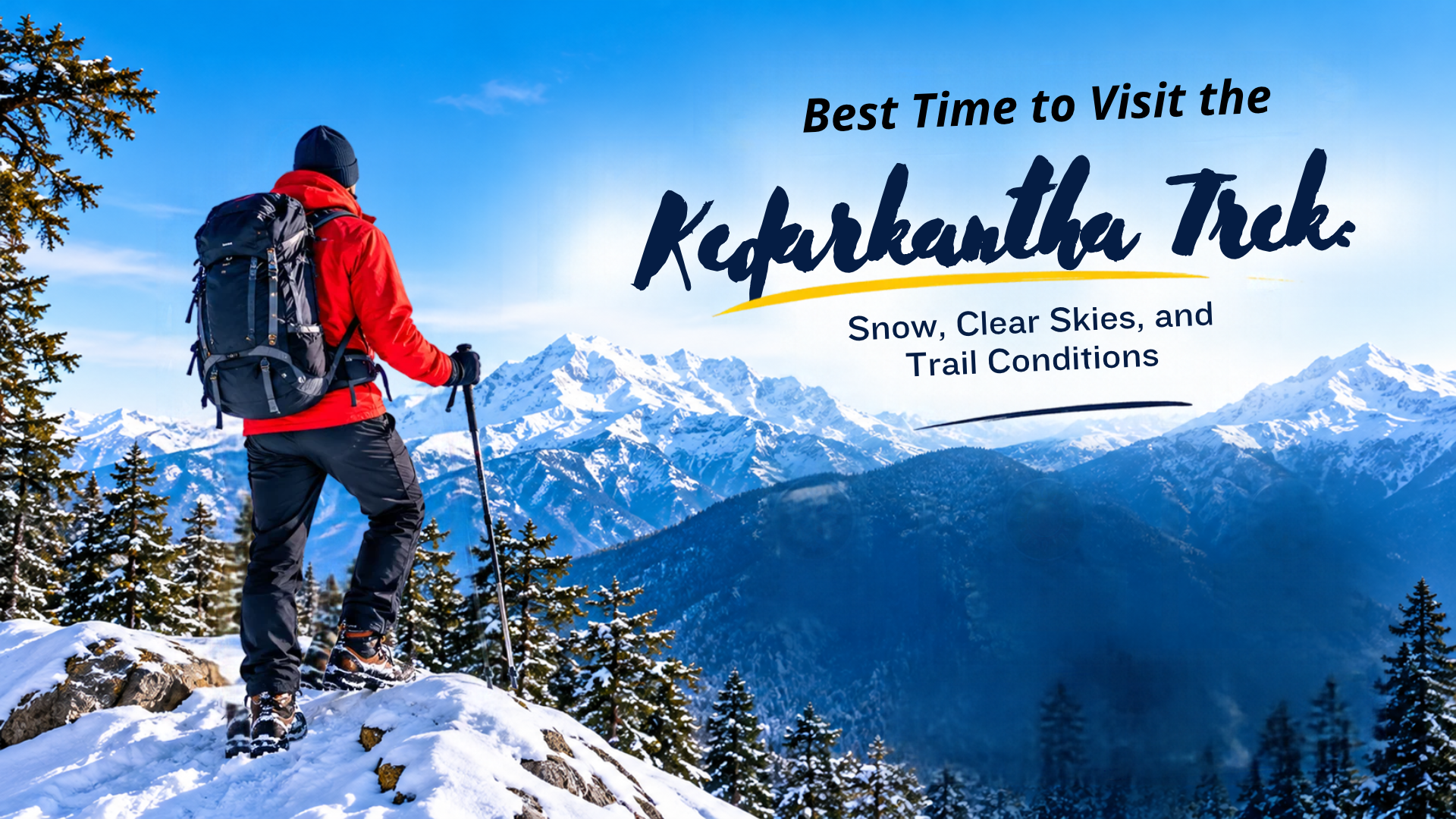
Quick answer: December to February gives the best chance of snow. March and April bring milder days with snow on higher sections. October and November offer crisp skies and fewer snowy trails. Snowfall changes every year, so no month can promise it.
A winter trek can mean fresh snow or a busy trail. Some trekkers want a white summit. Others prefer clear autumn skies or gentler spring afternoons. The summit sits at about 12,500 ft (3,810 m), and the standard trip from Sankri runs five days and four nights. Your dates shape what you will see, so choose them with care.
Choose Your Season for the Views and Trail Feel You Want
December to February: the best chance of snow. These months draw many first-time winter trekkers. Pine forests turn white, and campsites and the frozen lake at Juda Ka Talab look their best. Trekmount lists winter day temperatures at roughly 8°C to 15°C and nights between -5°C and -10°C. Expect snow-covered paths and plan for serious warm gear. Snow depth still varies from one year to the next.
March to April: longer days and milder afternoons. Warmer days and clearer skies arrive in spring. Snow often remains on higher sections while lower stretches are easier to walk. This window suits trekkers who want a winter feel without the harshest cold. It also works well for photographers who prefer clear visibility.
September to November: clear skies, less snow. October and November give crisp views and autumn colours around Sankri. Snow is less likely before winter sets in, and trails feel quieter than in peak winter weeks. Late November can feel wintry, but snow is not guaranteed.
Month-by-Month Guide to Narrow Your Dates
December and January. This is the classic snow trek window. Nights are cold, and fresh snow is possible. Holiday weeks can be busier, so book early. Check recent trail reports before you pay. Trekmount lists Kedarkantha trek dates for 2026–27 on its trek calendar.
February. Deep winter conditions can continue. Snow depth depends on recent weather, not the calendar alone, so ask your operator for the latest update.
March and April. Days grow milder, and the trail changes from week to week as snow melts. A local guide can tell you which camps and sections are still snow-covered.
September. This month falls near the end of the monsoon period, so check local reports for trail conditions. Trekmount does not recommend July and August because of heavy rain, slippery paths and landslide risk.
Match Your Travel Dates to Your Trekking Style
Pick winter if you want snow, but prepare for cold. This suits trekkers who want snowy camps and a winter summit climb. Pack thermals, a down jacket, gloves, a waterproof layer and shoes with good grip. If you lack winter experience, book with a qualified local operator.
Choose autumn for clear views and simpler trails. It suits trekkers who value mountain panoramas over snow. October is a good example of a clear-sky month, though weather can still turn.
Consider spring for a milder, quieter pace. It is the best fit if you want to avoid the coldest weeks.
Kedarkantha Trek Distance and What It Means for Your Timing
The Kedarkantha trek distance is about 20 km over the full route, split across short daily sections. Day 2 to Juda Ka Talab is roughly 4 km, and Day 3 to base camp is another 4 km. Summit day is the longest at about 6 km and 6 to 7 hours round trip. Snow slows the pace, which is why winter trips need steady walking and spare time in your plan.
The drive from Dehradun to Sankri takes about 10 to 11 hours. Build in buffer days in case weather or roads cause delays.
Plan Around Conditions, Not Just the Calendar
Review forecasts and local trail reports close to departure. Check for road access changes and local advisories. Compare recent trek reports with official weather information. A fixed month-by-month promise matters less than current advice from people on the ground.
Kedarkantha Trek Package: What to Check Before Booking
A good Kedarkantha trek package should be clear about what it covers. Trekmount’s five-day package starts at ₹5,499 (listed down from ₹6,999) and includes:
- Guesthouse and camp stays
- Meals from dinner on Day 1 to breakfast on Day 5
- A certified trek leader and local guides
- Tents, sleeping bags and mats
- Forest permits
- First aid and an oxygen cylinder
Personal gear, travel to Dehradun, insurance and emergency evacuation costs are excluded. Prices may change, so confirm them on the booking page.
When comparing the best Kedarkantha trek packages, use this checklist:
- Confirm dates, group size, guide credentials and cancellation terms.
- Ask about expected snow, daily walking time and gear needs.
- Check whether transport from Dehradun is included.
Final Takeaway
Choose winter for the best chance of snow, autumn for clear views, and spring for milder days. Weather varies, so recent local advice matters more than a fixed schedule. Pick your season, check current conditions, and book with a trusted local operator.
Frequently Asked Questions
Is December a good time for the Kedarkantha trek?
Yes. It is popular for snow and winter scenery, though nights are very cold.
When does it snow on Kedarkantha?
Snow is most likely from December to February, but it varies each year.
How cold does it get?
Trekmount lists nights between -5°C and -10°C in winter, and days between 8°C and 15°C.
Is it better in December or March?
December favours deeper snow. March favours milder weather and clear views.
Which month has the best views?
October and November often have the clearest skies. Winter mornings can also be spectacular.