
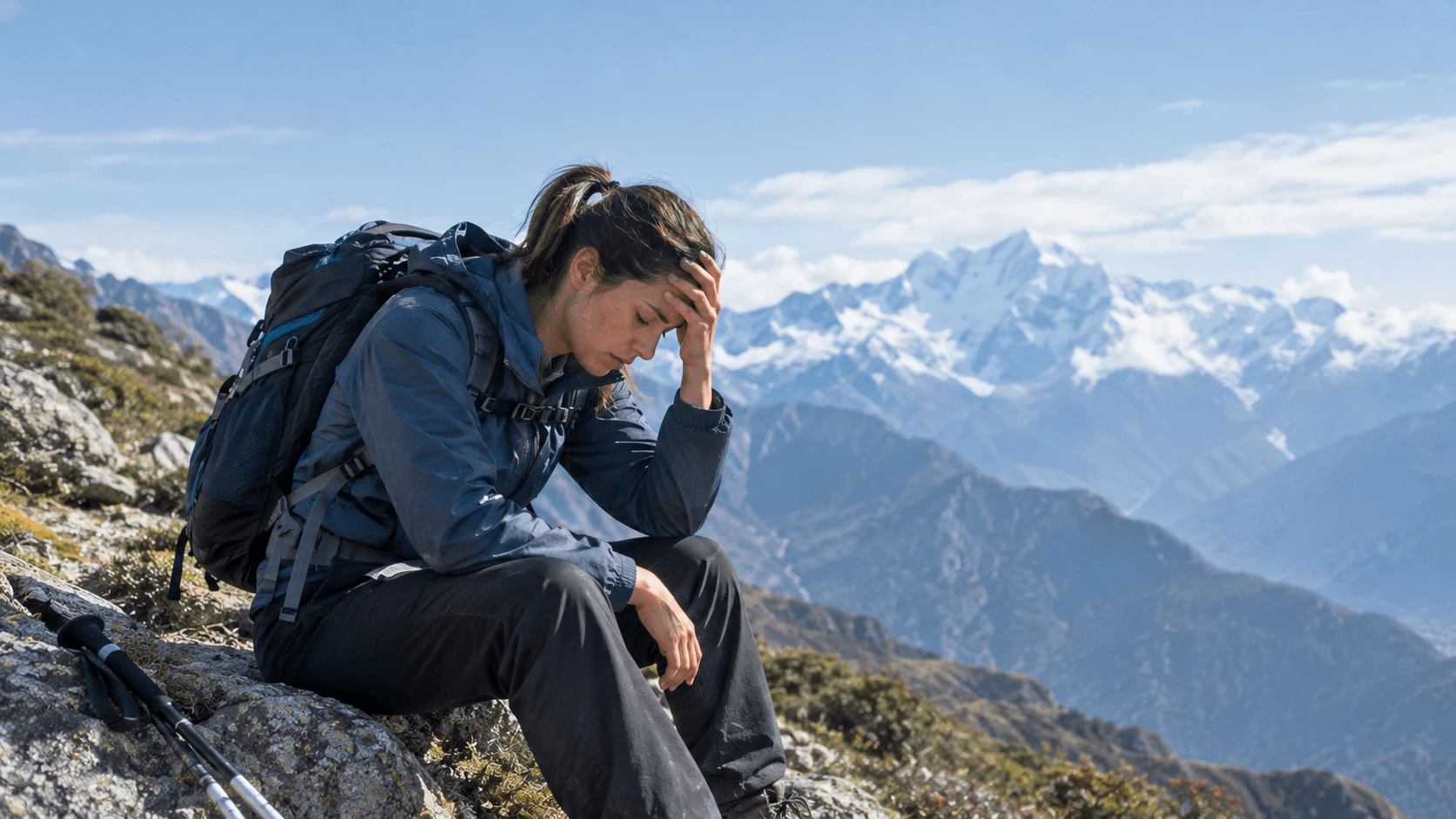
Mountain trekking is an exciting way to explore the Himalayas, experience breathtaking landscapes, and challenge yourself physically. However, as you climb higher, the air pressure decreases, and your body receives less oxygen with every breath. This change can sometimes lead to altitude sickness, a condition that every trekker should understand before heading into the mountains.
Whether you are planning the Kedarkantha Trek, Kuari Pass Trek, Brahmatal Trek, or another high-altitude adventure in Uttarakhand, knowing how to prevent altitude sickness during mountain trekking can help you prepare more responsibly.
Altitude sickness can affect beginners as well as experienced trekkers. Being physically fit does not guarantee protection, and symptoms should never be ignored simply because you are travelling with a group or following a planned itinerary.
In this guide, TrekMount explains what altitude sickness is, why it happens, its early warning signs, and the practical steps you can take to reduce your risk while trekking in the Himalayas.
What Is Altitude Sickness?
Altitude sickness, also called acute mountain sickness (AMS), is a condition that can develop when someone travels to a high elevation before their body has had enough time to adjust to the lower air pressure and reduced oxygen availability.
At higher altitudes, the percentage of oxygen in the air remains approximately the same, but the air pressure decreases. As a result, each breath delivers less oxygen to your body than it would at sea level.
Your body needs time to adapt to these conditions. This adjustment process is known as acclimatization.
Altitude sickness commonly becomes a concern when unacclimatized travellers ascend to elevations around 2,500 metres (8,200 feet) or higher, although individual risk varies and symptoms can occur at lower elevations.
Many Himalayan trekking routes involve significant elevation gain within a few days. Trekkers may travel from a relatively low-altitude town to a mountain campsite in a short period, giving their bodies limited time to adjust.
This is why altitude sickness prevention should be an important part of every high-altitude trekking plan.
Why Does Altitude Sickness Happen During Mountain Trekking?
Altitude sickness develops primarily because your body is exposed to lower oxygen pressure at higher elevations. However, several factors influence your risk.
1. Climbing too quickly
Ascending rapidly without allowing time for acclimatization is one of the most important risk factors. Travelling from a low-altitude location to a high mountain campsite in a single day can place additional stress on your body.
2. Sleeping at a higher altitude too soon
The elevation where you sleep is particularly important because your body continues adjusting overnight. Increasing sleeping altitude too quickly can raise the risk of altitude sickness.
3. Individual susceptibility
Some people develop altitude sickness more easily than others. Your previous experience at a similar altitude can provide useful information, but it cannot guarantee that you will remain symptom-free on your next trek.
4. An itinerary with insufficient acclimatization time
A trekking itinerary that focuses only on reaching the summit may not provide enough time for your body to adjust. Rest and acclimatization days can be important components of a safer itinerary.
5. Ignoring early symptoms
Continuing to climb when you have a headache, nausea, dizziness, or unusual fatigue can allow a mild problem to become more serious.
An important point to remember is that physical fitness does not prevent altitude sickness. Even a regular runner, athlete, or experienced mountaineer can develop symptoms when ascending too quickly.
What Are the Early Symptoms of Altitude Sickness?
Recognizing the early signs of altitude sickness is one of the most useful ways to protect yourself during a Himalayan trek.
Symptoms often appear within several hours after reaching a higher elevation, particularly following an ascent.
Common symptoms include:
- Headache, especially after ascending to a higher altitude.
- Nausea or an upset stomach.
- Loss of appetite.
- Dizziness or light-headedness.
- Unusual tiredness or weakness.
- Difficulty sleeping.
- Vomiting in some cases.
A headache combined with nausea, dizziness, fatigue, or other symptoms after an ascent may indicate acute mountain sickness.
However, not every headache or episode of tiredness is caused by altitude. Dehydration, exhaustion, migraine, infection, and other conditions can produce similar symptoms. A proper assessment is important when symptoms develop.
Never ignore symptoms just because they seem mild. Inform your trek leader or trekking companions, stop ascending, and seek medical advice.
When Does Altitude Sickness Become Dangerous?
Altitude sickness can occasionally progress to life-threatening conditions.
Two serious forms of altitude illness are:
High-Altitude Pulmonary Edema (HAPE): This involves fluid accumulation in the lungs. Warning signs include breathlessness at rest, a persistent cough, chest tightness, and a noticeable decline in exercise ability. Coughing up pink or frothy sputum is a particularly serious warning sign.
High-Altitude Cerebral Edema (HACE): This involves swelling of the brain and is a medical emergency. Warning signs include confusion, unusual behaviour, difficulty walking straight, loss of coordination, and reduced consciousness.
If you or another trekker develops these symptoms, arrange immediate descent to a lower altitude with assistance and seek emergency medical care. Supplemental oxygen may be needed if available, but it must not delay descent or evacuation.
Do not leave an affected trekker alone or encourage them to continue towards the summit.
How to Prevent Altitude Sickness During Mountain Trekking
There is no guaranteed way to eliminate altitude sickness, but careful preparation and gradual ascent can substantially reduce the risk.
Here are the most important altitude sickness prevention tips for Himalayan trekkers.
1. Ascend Gradually and Allow Time for Acclimatization
Gradual ascent is one of the most effective ways to reduce the risk of altitude sickness.
Your body needs time to adapt to lower oxygen availability. When you climb too quickly, your body may not be able to adjust adequately before you reach the next elevation.
Whenever possible, avoid travelling directly from a low altitude to a high sleeping altitude in a single day.
For many itineraries, spending two or three nights at a moderate elevation before ascending higher can improve acclimatization. Once above approximately 3,000 metres, commonly used guidance recommends limiting increases in sleeping altitude to around 500 metres per day, with an additional acclimatization day for every 1,000 metres of sleeping-altitude gain when feasible.
These are general planning guidelines, not a guarantee of safety or a substitute for a medically appropriate itinerary. Individual circumstances and the route matter.
For trekkers planning Kedarkantha, Kuari Pass, or Brahmatal, check the sleeping elevations, daily altitude gain, and available acclimatization opportunities before booking.
TrekMount encourages trekkers to understand the demands of their chosen route and follow the trek leader’s safety instructions rather than rushing to complete the itinerary.
2. Choose a Suitable Trekking Itinerary
A well-planned trekking itinerary should consider more than distance, sightseeing, and summit timings.
It should also account for:
- Starting elevation and maximum altitude.
- Daily elevation gain.
- Sleeping altitude at each campsite.
- Acclimatization opportunities.
- Weather and trail conditions.
- Availability of emergency support and evacuation options.
A trek with a gradual ascent may be more appropriate for some travellers than an itinerary that involves a rapid climb to a high campsite.
Do not assume that a shorter trek is automatically safer. A relatively short route can still involve a rapid elevation gain, while a longer itinerary may allow more time for adjustment.
Before joining a Himalayan trek, ask the trekking operator about its itinerary, altitude profile, safety procedures, and response plan for altitude-related illness.
3. Walk at a Comfortable Pace
Walking too quickly at high altitude can increase fatigue and make it harder to manage the physical demands of a trek.
Maintain a steady, comfortable pace that allows you to breathe without becoming excessively breathless. Take short breaks when needed, particularly on steep climbs.
Avoid competing with other trekkers or attempting to match the speed of the fastest person in your group.
At high elevations, a slower pace is often more practical than repeatedly pushing yourself and stopping to recover.
Use trekking poles where appropriate, keep your steps controlled, and tell your trek leader if you feel unusually exhausted.
Remember that walking slowly can help manage exertion, but it does not replace gradual acclimatization.
4. Stay Hydrated Without Forcing Excessive Water Intake
Maintaining normal hydration is important during mountain trekking. Cold weather, physical exertion, and dry mountain air can make it easy to overlook your fluid needs.
Carry drinking water and take regular sips throughout the day. Increase your fluid intake when activity, sweating, or conditions require it.
However, drinking excessive amounts of water does not prevent altitude sickness. Overhydration can cause a dangerous reduction in blood sodium levels, known as hyponatremia.
A practical approach is to drink regularly according to thirst, activity, and environmental conditions rather than forcing yourself to consume large quantities.
Warm drinks such as soup or tea may feel comforting in cold weather, but they are not a treatment for altitude sickness.
5. Eat Regular, Balanced Meals
Trekking requires energy, particularly when you are walking uphill for several hours.
At altitude, some people experience reduced appetite or mild nausea. Even so, try to eat regular meals and snacks that provide carbohydrates, protein, and other essential nutrients.
Useful trekking foods may include:
- Rice, roti, or other carbohydrate-rich meals.
- Oats and porridge.
- Bananas and other portable fruits.
- Nuts and trail mix.
- Energy bars.
- Soup and other easily tolerated foods.
Choose foods that suit your digestion and dietary requirements. Eating a balanced meal before a trekking day can help you maintain energy, while portable snacks can be useful during breaks.
However, no particular food can guarantee protection against altitude sickness. Good nutrition supports your overall trekking effort, while gradual ascent remains central to prevention.
6. Avoid Alcohol During Initial Acclimatization
Alcohol can interfere with sleep, affect judgement, and contribute to dehydration. Its effects can be particularly unhelpful when your body is adjusting to high altitude.
Avoid alcohol during the initial acclimatization period, especially during the first 48 hours after arriving at high altitude.
Alcohol can also make it harder to distinguish altitude-related symptoms from other problems.
Instead, focus on rest, appropriate hydration, meals, and following the planned ascent schedule.
7. Get Enough Rest and Avoid Excessive Exertion
Your body needs time to adjust to high altitude, particularly during the first few days.
Avoid intense exercise immediately after reaching a new elevation. Keep your activity comfortable and allow time to recover after demanding trekking days.
Good sleep habits may improve comfort and help you feel more prepared for the next day. However, sleeping well does not guarantee that you have acclimatized sufficiently.
Difficulty sleeping can occur at high altitude, and disturbed sleep alone does not necessarily indicate altitude sickness. Pay attention to the overall pattern of symptoms.
If you develop a headache accompanied by nausea, dizziness, or unusual fatigue, do not assume that you simply need more sleep. Stop ascending and inform your trek leader.
8. Prepare Your Body Before the Trek
Physical preparation helps you manage the demands of mountain trekking, even though it does not prevent altitude sickness on its own.
If you are preparing for your first Himalayan trek, begin a suitable fitness routine several weeks beforehand.
Your preparation can include:
- Brisk walking or hiking.
- Stair climbing.
- Moderate cardiovascular exercise.
- Leg-strengthening exercises.
- Balance and stability training.
- Practice walks with your trekking backpack.
Increase the duration and intensity gradually, allowing sufficient recovery between sessions.
Try to include longer walks and uphill practice if they are appropriate for your fitness level.
If you have an existing medical condition or are unsure whether high-altitude trekking is suitable for you, consult a healthcare professional before departure.
The goal of fitness training is to improve endurance and help you handle the trail more comfortably, not to make you immune to altitude sickness.
9. Discuss Preventive Medication With a Doctor
Some travellers may benefit from medication to prevent acute mountain sickness, particularly when their itinerary or previous history places them at increased risk.
Acetazolamide is a medicine commonly used to help prevent altitude sickness and support acclimatization.
However, it is not necessary or appropriate for everyone. Whether you should take it depends on your planned ascent, medical history, previous altitude-related problems, allergies, other medicines, and individual risk.
Speak with a qualified healthcare professional before your trek if you are considering preventive medication.
Do not start acetazolamide, dexamethasone, or another prescription medicine based solely on advice from fellow trekkers, social media, or a trekking checklist.
Medication should never be used as a reason to climb faster or ignore symptoms. If you develop signs of serious altitude illness, prompt descent and medical care remain essential.
10. Learn to Recognize Symptoms and Report Them Early
One of the most important trekking safety habits is communicating honestly about how you feel.
Some trekkers hide symptoms because they do not want to slow down the group, miss a summit, or disappoint their companions.
This can be dangerous.
If you develop a headache, nausea, dizziness, or unusual fatigue after ascending, tell your trek leader and stop climbing until the situation has been assessed.
Do not ascend to a higher sleeping altitude while experiencing symptoms suggestive of acute mountain sickness.
If symptoms worsen despite rest or treatment at the same altitude, descent is necessary. Severe symptoms require immediate assisted descent and emergency medical care.
A responsible trekking decision prioritizes health over reaching the summit.
Can You Prevent Altitude Sickness Through Fitness Alone?
No. Physical fitness cannot guarantee protection against altitude sickness.
A person who runs regularly, exercises every day, or has completed several Himalayan treks can still develop acute mountain sickness.
Fitness helps your body manage the physical workload of trekking, but altitude sickness is primarily related to your response to reduced oxygen pressure and the rate at which you ascend.
For example, a fit trekker who climbs rapidly and sleeps at a much higher elevation may face greater risk than a less athletic trekker following a suitable, gradual ascent schedule.
This is why acclimatization, appropriate itinerary planning, symptom awareness, and timely descent are essential parts of high-altitude trekking safety.
Does Drinking More Water Prevent Altitude Sickness?
No. Drinking excessive amounts of water does not prevent altitude sickness.
Staying hydrated is important, but overhydration can be harmful. Drinking far more than your body needs may contribute to hyponatremia, a condition in which blood sodium levels become dangerously low.
Instead, drink regularly according to thirst, exertion, and weather conditions. Eat normally when possible and pay attention to symptoms such as nausea, headache, confusion, or unusual weakness.
If symptoms develop after an ascent, do not assume that drinking water will solve the problem. Stop ascending, inform your trek leader, and seek appropriate medical assessment.
What Should You Do If You Experience Altitude Sickness During a Trek?
If you suspect altitude sickness during a Himalayan trek, act early instead of waiting for symptoms to become severe.
Step 1: Stop ascending.
Do not continue towards the summit or move to a higher sleeping altitude while experiencing symptoms suggestive of acute mountain sickness.
Step 2: Inform your trek leader or trekking companions.
Explain your symptoms clearly. Avoid hiding a headache, nausea, dizziness, or unusual tiredness.
Step 3: Get assessed and follow medical guidance.
Symptoms can have different causes. A qualified medical professional or trained emergency responder should help determine the appropriate response whenever possible.
Step 4: Descend if symptoms worsen or do not improve.
If symptoms worsen despite rest at the same elevation, descend. Even mild symptoms may require a change in the itinerary.
Step 5: Treat severe symptoms as an emergency.
Breathlessness at rest, confusion, difficulty walking straight, or reduced consciousness can indicate a serious altitude-related emergency. Arrange immediate descent and urgent medical care. Provide supplemental oxygen if available and appropriate, but do not delay evacuation.
Never leave a severely ill trekker alone. Do not allow summit plans, weather concerns, or group schedules to take priority over emergency care.
How Does Altitude Sickness Relate to Popular Uttarakhand Treks?
Uttarakhand offers a wide range of Himalayan trekking experiences, from shorter hikes to demanding high-altitude routes. Each trek has its own elevation profile, campsite locations, and environmental conditions.
Kedarkantha Trek
The Kedarkantha Trek is a popular Himalayan trekking route known for its forest trails, mountain campsites, winter landscapes, and summit views.
Although it is often selected by beginners, it still requires preparation and sensible pacing. Cold temperatures, physical exertion, and elevation gain can make the experience challenging.
Trekkers should understand the itinerary, follow their guide’s instructions, and report symptoms promptly rather than assuming that a beginner-friendly classification means altitude-related illness is impossible.
Kuari Pass Trek
The Kuari Pass Trek offers views of Himalayan peaks and varied mountain landscapes. Its route involves sustained walking and changes in elevation.
Trekkers should review the planned sleeping altitudes and daily elevation gains before departure. Allowing sufficient time for acclimatization and avoiding unnecessary exertion can help reduce risk.
Brahmatal Trek
The Brahmatal Trek is known for its winter scenery, forest trails, mountain views, and snow-covered sections during suitable conditions.
Winter weather can add challenges such as cold exposure, difficult trail conditions, and changing visibility. Trekkers should prepare for both altitude and weather, follow the itinerary, and avoid pushing ahead when they feel unwell.
Pangarchulla Peak Trek
Pangarchulla Peak is a more demanding trekking objective, particularly around the summit section. Physical preparation, appropriate equipment, route planning, and awareness of altitude-related symptoms are important.
Trekkers should understand the difficulty level and discuss their experience and medical considerations with the trekking operator before booking.
For any Himalayan trek, the specific route, altitude profile, weather, and individual health matter more than the trek’s popularity or difficulty label.
TrekMount encourages trekkers to prepare according to the demands of their chosen route, understand their limits, and make safety-conscious decisions throughout the journey.
A Practical Altitude Sickness Prevention Checklist
Before starting your Himalayan trek, review this checklist.
Before departure
- Choose an itinerary with a sensible ascent profile.
- Discuss relevant medical conditions with a healthcare professional.
- Ask about sleeping altitudes and acclimatization days.
- Prepare your fitness gradually.
- Discuss preventive medication with a doctor if appropriate.
- Carry personal medicines and essential trekking supplies.
During the trek
- Ascend gradually.
- Maintain a comfortable walking pace.
- Eat regular meals and drink according to thirst.
- Avoid alcohol during initial acclimatization.
- Allow time for rest and adjustment.
- Tell your trek leader about symptoms immediately.
- Never ascend to sleep higher while experiencing symptoms of altitude sickness.
In an emergency
- Recognize breathlessness at rest, confusion, and difficulty walking straight as serious warning signs.
- Arrange immediate assisted descent and urgent medical care for severe symptoms.
- Do not leave an affected trekker alone.
- Never delay emergency action to reach a summit or campsite.
Following this checklist can help you make better decisions, but no checklist can completely eliminate the risk of altitude illness.
Frequently Asked Questions About Altitude Sickness
1. How can I prevent altitude sickness during mountain trekking?
The most effective general approach is gradual ascent and adequate acclimatization. Avoid rapid increases in sleeping altitude, maintain a comfortable pace, avoid alcohol during initial acclimatization, and recognize early symptoms. Consult a healthcare professional about preventive medication if your risk warrants it.
2. At what altitude does altitude sickness start?
Altitude sickness commonly becomes a concern at around 2,500 metres (8,200 feet) and above, especially for people who have not acclimatized. However, individual susceptibility varies, and altitude alone cannot determine whether someone will develop symptoms.
3. Can beginners get altitude sickness on Himalayan treks?
Yes. Beginners can develop altitude sickness, but experienced and physically fit trekkers can also be affected. The speed of ascent, sleeping altitude, individual susceptibility, and acclimatization are important factors.
4. How long does it take to acclimatize to high altitude?
The body begins adjusting after ascent, with important early changes occurring over approximately three to five days. Acclimatization continues for longer, and the time required depends on the altitude, ascent rate, and individual response.
5. Does drinking water help prevent altitude sickness?
Normal hydration supports health during trekking, but drinking excessive water does not prevent altitude sickness. Drink according to thirst and activity, and do not use hydration as a substitute for gradual ascent.
6. Is altitude sickness dangerous?
Mild acute mountain sickness may improve with appropriate rest and management, but altitude illness can become life-threatening. Breathlessness at rest, confusion, difficulty walking straight, and reduced consciousness require emergency action and immediate descent.
7. Should I continue trekking if I have a headache at high altitude?
Do not ignore a headache that develops after ascending, especially if it occurs with nausea, dizziness, or unusual fatigue. Stop ascending, inform your trek leader, and seek assessment. Do not move to a higher sleeping altitude while symptoms suggest acute mountain sickness.
8. Can altitude sickness occur on the Kedarkantha Trek?
Yes. The Kedarkantha Trek reaches an elevation of approximately 3,800 metres, so altitude-related symptoms are possible. A suitable itinerary, gradual ascent where feasible, and early reporting of symptoms are important.
9. Can medication completely prevent altitude sickness?
No. Preventive medicines can reduce risk for some travellers, but they do not provide complete protection. Medication decisions should be made with a qualified healthcare professional, and symptoms must still be taken seriously.
10. What is the safest response to severe altitude sickness?
Arrange immediate assisted descent and urgent medical care. Supplemental oxygen may help if available, but it must not delay descent or evacuation. Do not leave the affected person alone or allow them to continue climbing.
Final Thoughts: Trek Safely in the Himalayas With TrekMount
Mountain trekking offers unforgettable experiences, from walking through Himalayan forests to watching the sunrise over snow-covered peaks. But a successful trek is not just about reaching the summit; it is also about understanding the environment, respecting your limits, and making safe decisions.
Learning how to prevent altitude sickness during mountain trekking is an important step towards a better-prepared Himalayan adventure.
Remember the essentials: ascend gradually, allow time for acclimatization, maintain a comfortable pace, eat and drink sensibly, avoid alcohol during initial acclimatization, and report symptoms early. Never continue ascending when you suspect altitude sickness, and seek immediate descent and medical assistance if serious symptoms develop.
Whether you are planning the Kedarkantha Trek, Kuari Pass Trek, Brahmatal Trek, or Pangarchulla Peak Trek, preparation and responsible decisions can make a meaningful difference to your experience.
At TrekMount, the aim is to help trekkers explore the Himalayas with better preparation, practical information, and respect for mountain safety. Before booking your next adventure, understand the route, ask questions about the itinerary, and choose a trekking plan that takes acclimatization and safety seriously.
Contact TrekMount
Planning your next Himalayan adventure? Get in touch with the TrekMount team for trek dates, batch availability, pricing details, itinerary information, and booking assistance.
Phone:
- +91 8057454470
- +91 6398475213
- +91 6396096682
Email: info@trekmount.com
TrekMount – Explore the Himalayas with Confidence
Prepare well, trek responsibly, and remember that returning safely is always more important than reaching the summit. Connect with TrekMount to explore your trekking options and plan your next Himalayan adventure with safety and preparation in mind.